
Running a Sex Offender Check in Marion County
The Tennessee Bureau of Investigation manages the official statewide registry. Registering agencies supply the data, and the TBI publishes the public fields allowed by law. Marion County does not publish a separate local registry portal in the researched official sources. The state registry is therefore the primary public channel for a Marion County sex offender check.
Begin with a name when checking a known person. Use a geographic search when the concern is a Marion County area. Then compare the photograph, aliases, address, description, status, and offense details rather than relying on one name. For a multistate question, add the U.S. Department of Justice national search. Important results should be confirmed with the registering agency identified on the profile.
TBI Data for Marion Registry Searches
A registry entry is not written by the search portal itself. The listed registering agency submits the information, and TBI warns readers to verify it. A move, new custody event, noncompliance issue, or processing delay can make the public view lag behind the underlying event. This is one reason a Marion County registry result should be treated as a sourced record, not as an infallible real-time report.
The TBI registry information page gathers the statutory links, limits, classification rules, and termination process.
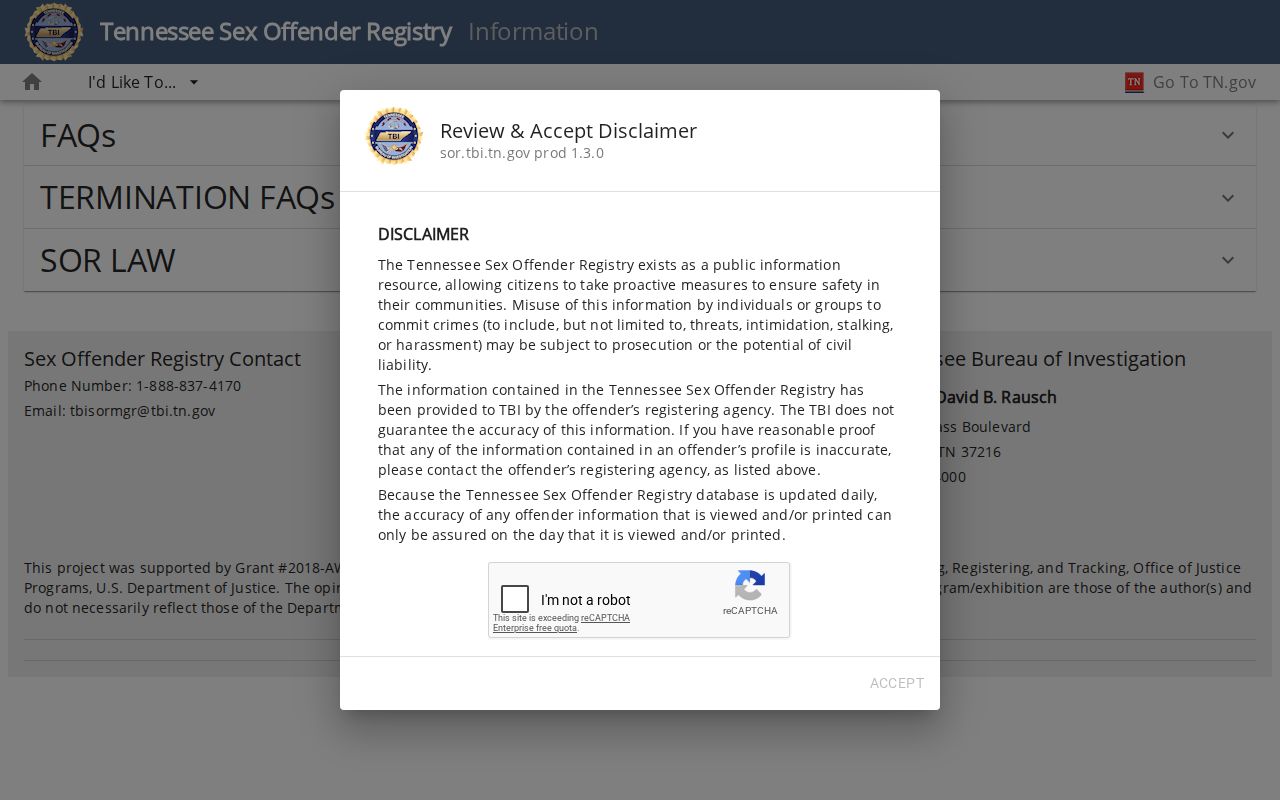
That source is also the best place to recheck duties or a legal restriction before acting. The profile's registering agency is the practical contact for a disputed address or status.
Searching the Tennessee Sex Offender Registry
The Tennessee Sex Offender Registry supports name and geographic or location-based search modes, with list and map results. The live controls can change, so use the labels shown on the official interface and do not assume a filter that is not displayed. Search and reset actions help refine a query without turning a broad result set into a mistaken identity.
- Open the official TBI registry and read the conditions and warning before using the search.
- Choose a name or geographic search. Enter only the known facts, then set Marion County or the relevant local place through the available location controls.
- Review list and map results. Compare names, aliases, photographs, and physical details before selecting a profile.
- Open the profile and check status, addresses, registering agency, classification, and offense information. Contact the named agency when confirmation matters.
| Control | Type | Required | Verified Scope |
|---|---|---|---|
| Name search | Search mode | Choose one mode | Uses identity criteria shown on the live interface |
| Geographic or location search | Search mode | Choose one mode | Finds results tied to entered location criteria |
| Search | Action button | Yes | Returns map or list results |
| Reset | Action button | No | Clears the current criteria |
| Map and list | Result view | No | Offers two ways to inspect matching records |
The official interface is shown in the TBI registry search source.
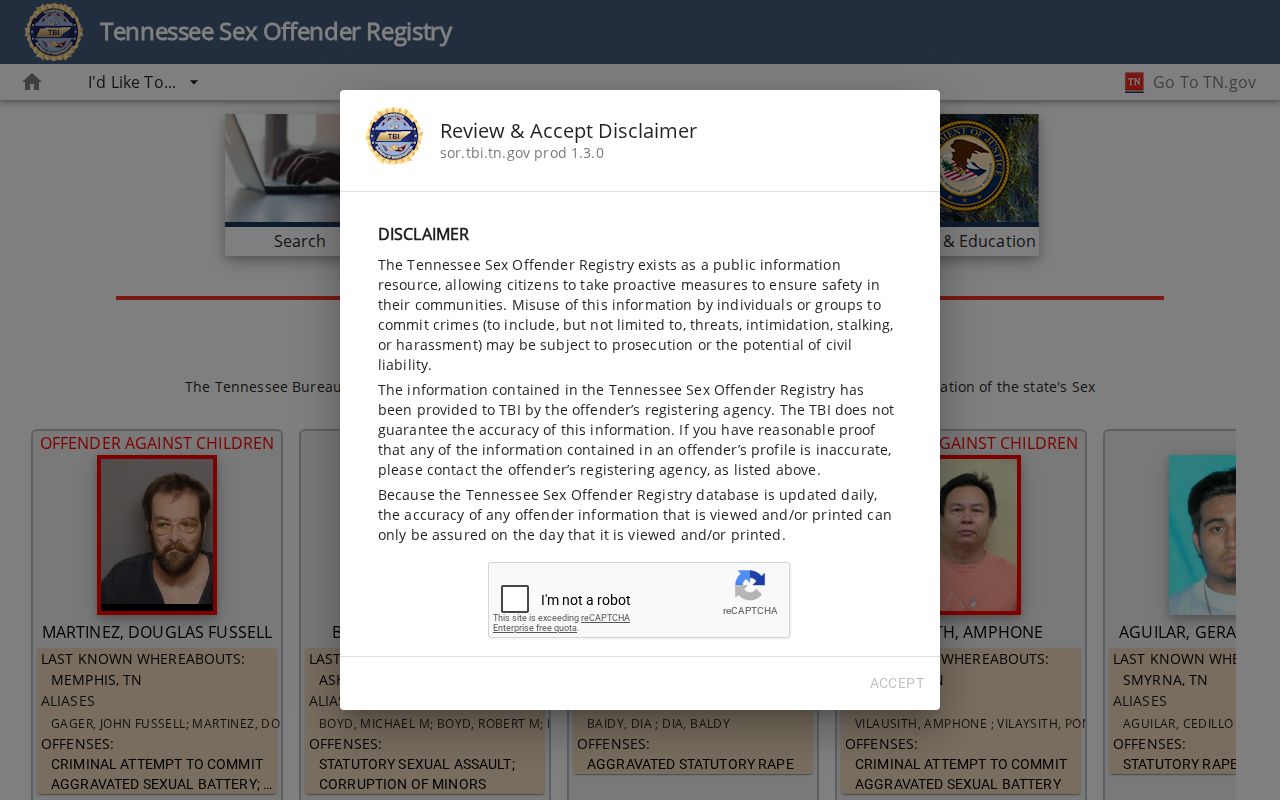
Use the actual live dropdowns and fields at search time. The research did not verify each current option, so unsupported ZIP, radius, or alert controls are not claimed here.
NSOPW Extends Marion Registry Searches
The TBI registry remains the primary Tennessee source. The Dru Sjodin National Sex Offender Public Website, or NSOPW, adds a nationwide layer across participating jurisdictions.
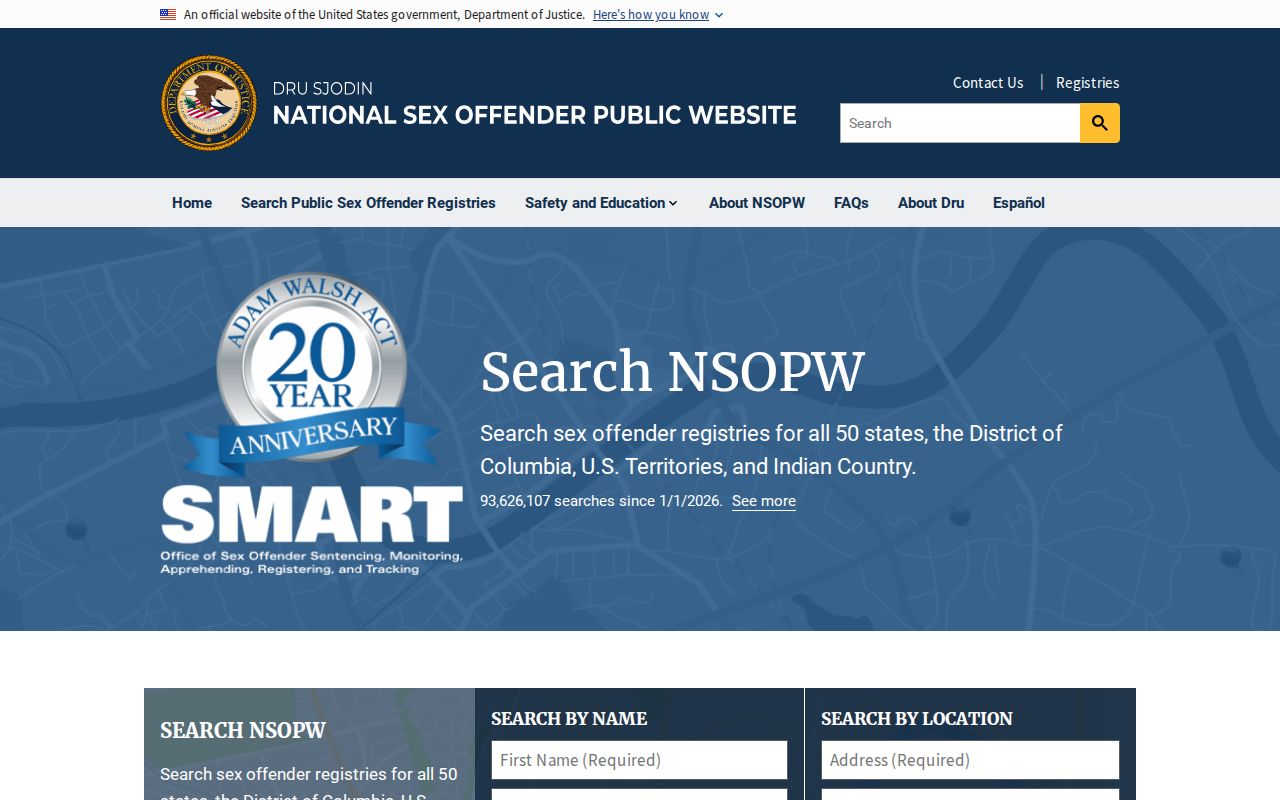
NSOPW is useful when a person may have records outside Tennessee or an address sits near a state border. Conditions of use and CAPTCHA may apply. A national result should still be opened at its originating jurisdiction, since the home registry supplies the controlling profile and contact details.
Marion County's southeast Tennessee location makes this extra check practical for cross-state awareness. It does not turn registry absence into proof that no offense occurred. Registry systems cover only people and offenses that trigger registration under the governing law.
What a Registry Profile Shows
A Tennessee public profile can combine identity, location, agency, status, and qualifying offense details. Some entries carry more fields than others because disclosure depends on the law and available agency submission. Read the whole profile. A name alone is not enough to connect a record to a person.
| Name and aliases | Identifies the registered person and other reported names. |
|---|---|
| Photo and description | May include photographs, physical traits, age or birth information, and scars, marks, or tattoos. |
| Registered addresses | May show primary, secondary, and temporary addresses allowed for public display. |
| Offense information | May show the qualifying offense, conviction jurisdiction, and conviction date. |
| Classification | Uses Tennessee terms such as sexual offender or violent sexual offender, not a simple consumer tier score. |
| Status and agencies | May identify compliance status and the registering or supervising agency. |
| Other public fields | Vehicle, school, or other registration data may appear when state law makes it public. |
Profiles are registration records, not full court files. For the conviction judgment, case events, and sentence, the court that handled the case is the better source. Sensitive or nonpublic data will not appear simply because a related public field is present.
Map Pins and Marion Registry Limits
An address search is a snapshot based on data submitted through a registering agency. A marker can help with general awareness, but it is not a survey, title record, or legal finding about a property boundary. Recent moves, custody, noncompliance, processing time, and unclear boundaries can affect what appears.
Check the full address text and agency, not only the map symbol. If a location seems inconsistent, contact the listed agency or TBI. Tennessee residence and presence restrictions depend on the statute and the person's status. The consolidated official authority is Tenn. Code Ann. §40-39-211 through the TBI information page. Avoid repeating a distance from memory or using a map pin to decide whether conduct is lawful.
Note: A map marker aids awareness but does not establish a legal property line or prove a current physical location.
Registration Requirements and Levels in Tennessee
Tennessee uses statutory categories, not a plain Tier I, Tier II, and Tier III public system. The main labels are sexual offender and violent sexual offender. Classification affects duties and the path, if any, toward termination. Registration does not end just because a minimum period passes.
| Classification or Path | General Duration | Key Caveat |
|---|---|---|
| Sexual offender | Statutory minimum, then possible request | Termination under §40-39-207 is not automatic |
| Violent sexual offender | Generally life | Confirm the qualifying classification under §40-39-202 |
| Repeat qualifying offender | Life | Ordinary removal is generally unavailable |
| Violent juvenile sexual offender | Separate juvenile criteria | Special rules appear in §40-39-207(j)(3) |
| Vacated or expunged conviction | Document-based review | Removal request may be possible under §§40-39-207 and 40-39-209 |
Required reporting includes initial registration, periodic verification, and prompt updates to required information. The exact schedule and duties depend on the statute and record. Verify them through TBI or the registering agency rather than inferring them from a profile's last visible update.
Marion Registry Removal Is Not Automatic
Only the offender or a legally authorized representative may request termination, according to the TBI FAQ. A qualifying sexual offender must meet the statutory conditions and provide identity and supporting records. Time alone does not remove the entry. Violent sexual offenders and repeat qualifying offenders generally remain registered for life, while juvenile cases follow separate rules.
Reversal, vacatur, successful post-conviction relief, withdrawal of a plea, or expungement may support a documentary removal request under §§40-39-207 and 40-39-209. The underlying court order must be obtained from the court that entered it. TBI then needs the documents required for its review. A stale public result should be raised with TBI and the registering agency rather than treated as proof that a court order had no effect.
Confirming a Marion Registry Listing
First compare the profile's identity details, classification, offense, address, status, and listed agency. Save the record identifiers and note when the search was run. Next, contact the registering agency shown on that entry and state the exact field that needs confirmation. TBI is the statewide custodian, but the registering agency is often closest to an address or compliance update.
If the profile identifies the Marion County Sheriff as the registering agency, confirm its current numbers through the official sheriff contact page. The Marion County contact directory supplies a second official routing source, and the county government homepage links the broader department directory. Do not assume that the sheriff is the registering agency for every profile. Use the agency actually printed on the record.
A no-result search also needs care. Try a corrected name or a geographic mode supported by the live site, then use NSOPW if another state may be involved. Do not infer that no qualifying offense exists. A person may fall outside Tennessee registration law, have a record in another jurisdiction, or be affected by reporting and processing conditions.
Lawful Use and Community Notification
Registry information supports personal and family safety planning and informed community awareness. Use it to understand an official profile, confirm a location with the listed agency, and discuss practical safety steps without confronting the registrant or household. Share only what the official record supports and account for the limits stated by TBI.
Misuse is prohibited: Misusing registry information is a crime under Tennessee law. Tenn. Code Ann. §40-39-208 and the related statutory framework prohibit unlawful conduct tied to registry information. Do not harass, threaten, intimidate, or target a registrant or anyone in the household.
Report an urgent safety concern to law enforcement. Questions about the accuracy of an entry should go to the registering agency or TBI. Vigilantism can harm people, interfere with official work, and create criminal exposure. The registry is an awareness tool, not permission to punish, shame, or interfere with anyone.