
Criminal Cases in the Marion County Courts
Marion County is part of Tennessee's 12th Judicial District. Circuit Court hears felony trials and cases sent up from lower proceedings. General Sessions handles misdemeanors within its jurisdiction, warrants, initial appearances, bond issues, and preliminary felony hearings. A municipal court in Jasper, Whitwell, or South Pittsburg keeps its own ordinance and traffic docket, but a state felony prosecution does not stay in city court.
Circuit Court Clerk Lonna Henderson is the principal Marion County criminal-record custodian. Her office is at the Justice Center in Jasper, with published mail at P.O. Box 789, Jasper, TN 37347. Call 423-942-2134 or email lhenderson@marioncountytn.net. The Tennessee court clerk profile confirms that channel.
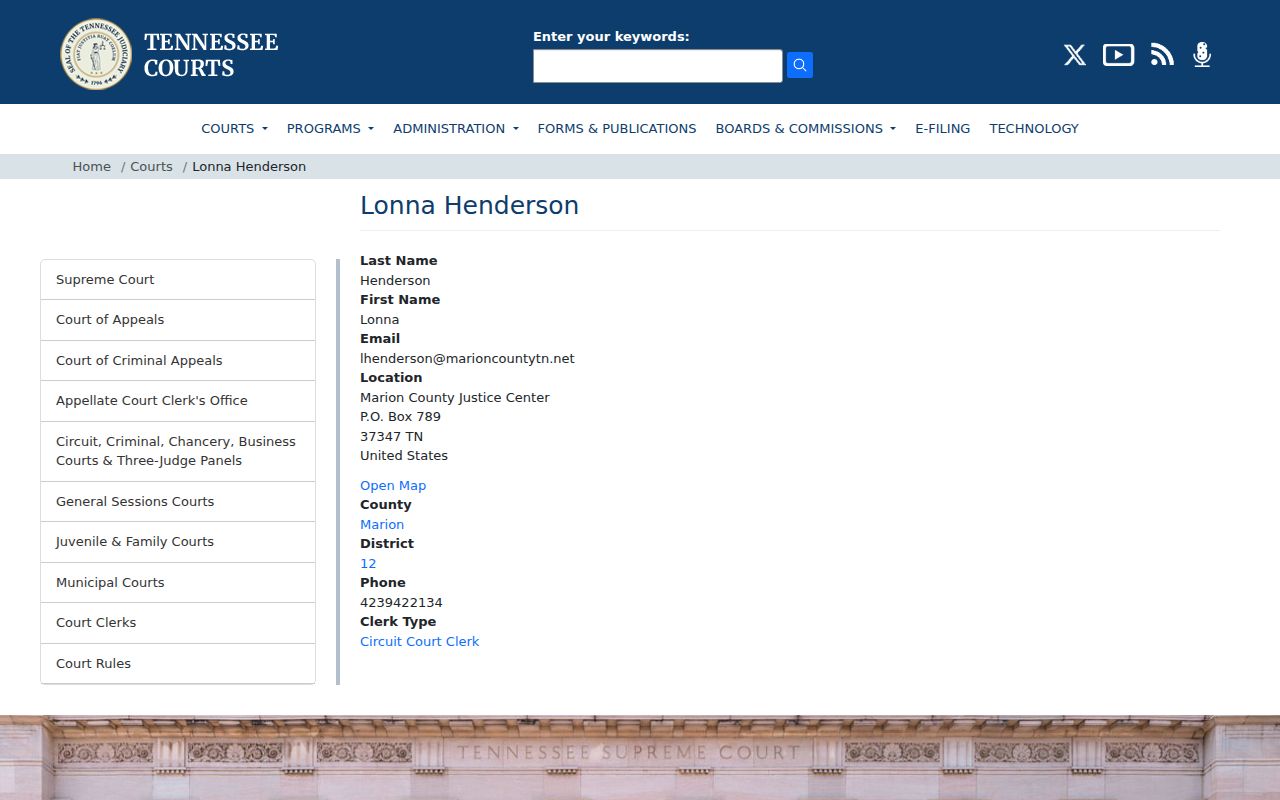
The profile is the best official point of reference before requesting a docket, judgment, or certified court record.
Marion County Criminal Court Map
The court named on the citation, warrant, or docket controls where the record begins. Choosing by the street address alone can send a request to the wrong office. The Clerk and Master at the county courthouse handles Chancery matters, not ordinary criminal trial files.
| Court or Office | Criminal Role | Official Contact |
|---|---|---|
| Marion County Circuit Court | Felony trials and bound-over cases | Justice Center; 423-942-2134 |
| General Sessions Court | Misdemeanors and early felony stages | Route through 423-942-2134 |
| Jasper City Court | Municipal ordinance and traffic docket | 32 Courthouse Square; 423-942-5862 |
| Whitwell Municipal Court | Municipal matters | 13671 Highway 28; 423-658-5151 ext. 2 |
| South Pittsburg Municipal Court | Municipal matters | 204 W. Third Street; 423-837-5012 |
The statewide Tennessee clerk directory helps verify city and county clerk contacts.
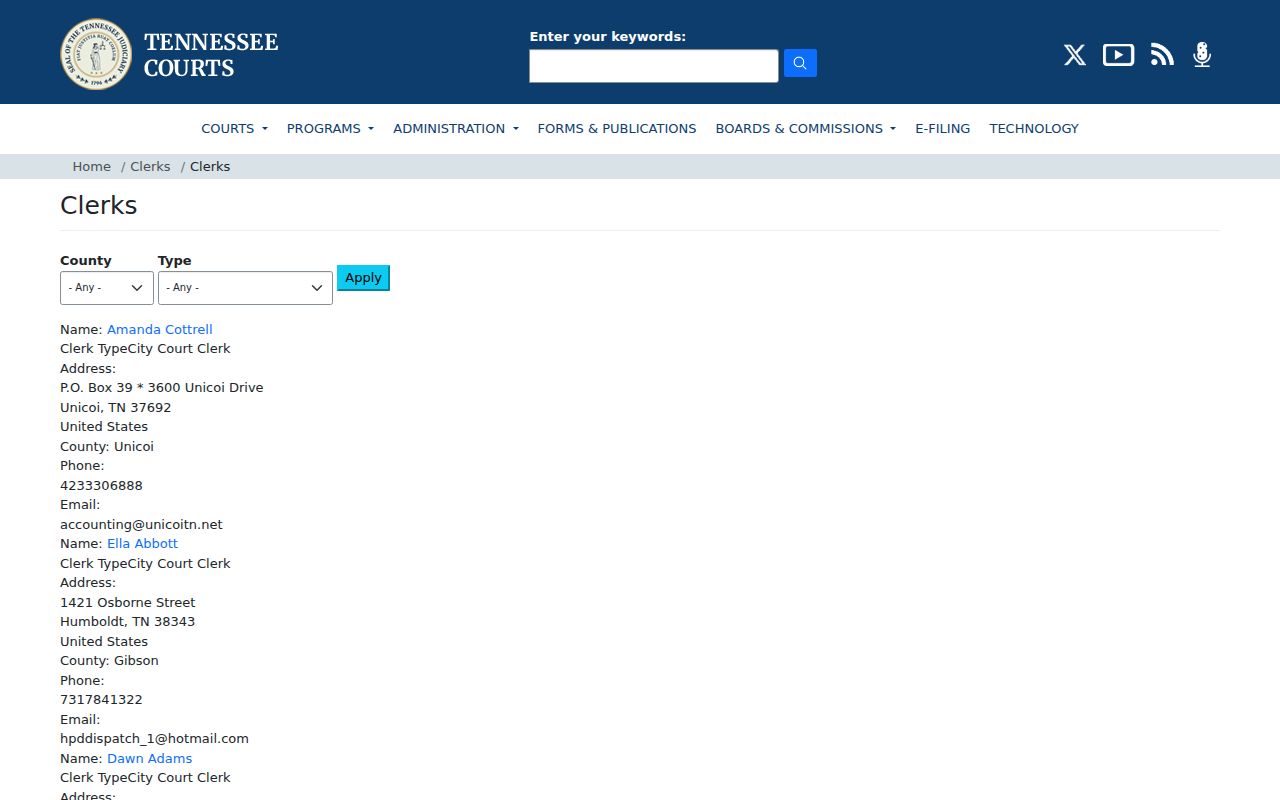
The directory is a contact tool, not an online Marion County docket search.
How to Search Case Records
No official online Marion County trial-court case portal was located. The verified route is a phone or counter request to the clerk. A case number is the strongest key. When it is unknown, supply the full name, a filing or arrest date range, and the expected court level. Ask for the docket sheet first because it provides the document list and helps avoid paying for pages that do not answer the question.
- Read the citation, bond paper, or prior notice and identify the named court.
- Call the Marion County Circuit Court Clerk at 423-942-2134 with the name and case number if known.
- Ask whether the file is General Sessions, Circuit Court, municipal, archived, or linked to an appeal.
- Request the docket sheet, then name the complaint, indictment, judgment, sentence, or other document needed.
- Confirm inspection, retrieval time, copy cost, certification, and mail or electronic delivery before ordering.
Because there is no public web form, these are clerk request keys rather than online search controls.
| Request Field | Type | Required | Use |
|---|---|---|---|
| Defendant name | Text | Usually | Use the complete recorded name |
| Case number | Text | No, but best | Separates similar names and related files |
| Filing or event date | Date range | No | Narrows the clerk's search |
| Court division | Choice | If known | General Sessions, Circuit, or municipal |
| Document and certification | Request detail | For copies | States the exact item and whether it must be certified |
Marion County Docket Sheet First
A docket is the court's chronological event list. It can reveal the filed charge, hearing dates, counsel, bond orders, motions, subpoenas, plea or trial, judgment, sentence, costs, probation activity, capias entries, and appeal notice. It also tells a requester which underlying papers are likely to matter.
For an older Marion County criminal case, ask whether the file is archived and how long retrieval takes. The official research found no published local charge for plain or certified copies. Request the current amount and an itemized estimate rather than assuming another Tennessee county's fee applies.
Note: A clerk's phone response can route a request, but only the supplied record or certified copy documents the case result.
What the Case File Shows
A Marion County criminal case file documents what prosecutors filed and what the court did. It is distinct from the sheriff's incident report and the jail's booking entry. A received charge can change before indictment, and only the later docket and judgment show the adjudicated result.
| Case Number & Court | The local identifier, division, judge, filed date, and current status. |
|---|---|
| Charging Document | Complaint, warrant, citation, indictment, or other formal accusation in the file. |
| Docket Entries | The ordered list of filings, appearances, motions, orders, and hearings. |
| Hearing Dates | Scheduled and completed court events, subject to later resets. |
| Disposition & Judgment | The result for each count, such as dismissal, plea, acquittal, or conviction. |
| Sentence & Conditions | Confinement, probation, restitution, fines, costs, and other judgment terms. |
Public fields may also show statute and offense class, counsel roles, bond, violations, and a linked appellate number. Victim, minor, and protected identifying information can be redacted.
Marion County True Bill Terms
Felony files use terms that mark a case's path from General Sessions toward Circuit Court. A reader should not treat each docket phrase as a conviction. Most terms name a stage, filing, or decision about whether prosecution may continue.
- Bind-over
- Transfer of a felony matter for grand-jury and Circuit Court proceedings after probable cause is found or review is waived.
- True bill
- A grand-jury decision approving an indictment.
- No bill
- A grand-jury decision not to indict on the presentation.
- Nolle prosequi
- The prosecutor's formal choice not to proceed with a charge at that time.
- Capias
- Court process directing custody, often tied to a missed appearance or enforcement of a judgment.
A true bill starts the indicted Circuit Court phase. It does not decide guilt. A judgment entered after plea or trial supplies the final trial-level result.
Stages of a Criminal Case
A misdemeanor may remain in General Sessions, while a felony can cross several Marion County record sets. The arrest or citation comes first. General Sessions handles initial review and may conduct a preliminary hearing. A bound-over matter reaches the grand jury, and a true bill produces an indictment in Circuit Court.
Case flow: Charges Filed › Arraignment › Pretrial › Plea or Trial › Disposition › Sentencing
Motions, subpoenas, bond orders, counsel appointments, and resets may appear between those main points. An appeal then creates a new appellate number and docket without replacing the Marion County trial file. The trial clerk remains the source for the complaint, indictment, local docket, judgment, and costs.
Marion County Appeals Are Separate
A published Tennessee appellate opinion is not the full trial record. It summarizes the issues needed for review and may identify the Marion County case number, judge, conviction offenses, sentence questions, counsel, filing date, and appellate result. Trial motions, exhibits, routine docket entries, and cost details remain in the clerk's underlying file.
Recent Marion County opinions show this separation. A 2025 Tennessee Supreme Court decision addressed offense elements and appellate reversal or affirmance. A 2024 Court of Criminal Appeals matter showed juvenile transfer, protected use of initials for a minor, trial judgment, sentencing, and review. These cases explain record structure; they should not be used to republish private-party identifiers.
Search the appellate calendars and opinions through the Tennessee courts. Then use the trial case number to request the source file in Marion County.
Federal Cases Outside Marion County Courts
Marion County lies in the U.S. District Court for the Middle District of Tennessee. A federal indictment, federal docket, or federal judgment will not be in the county clerk's trial files. The federal court and PACER are the right channels. The Bureau of Prisons locator, not Tennessee FOIL, covers federal prison custody.
The Middle District of Tennessee site provides official federal court information.
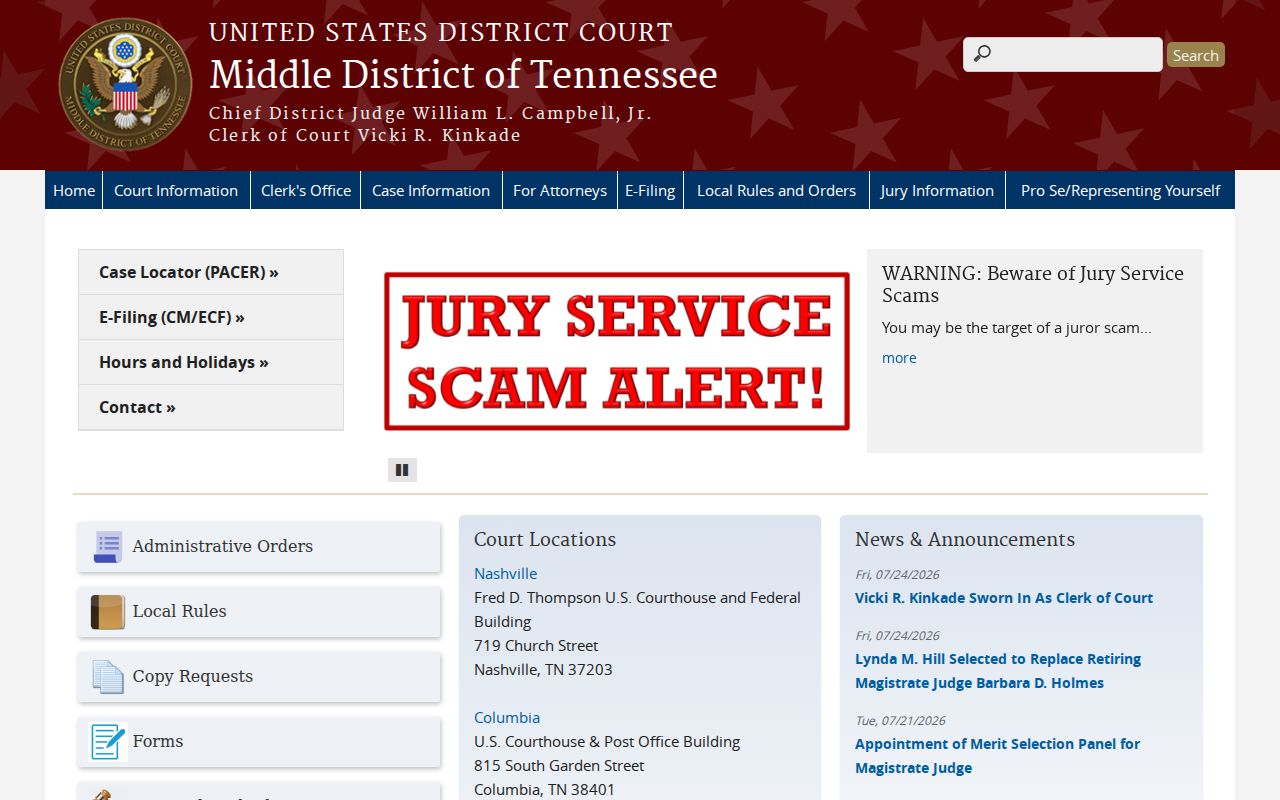
The district page helps distinguish a federal filing from a state case in Marion County Circuit Court.
The official PACER system provides federal dockets and filed documents under the federal judiciary's current fee schedule.
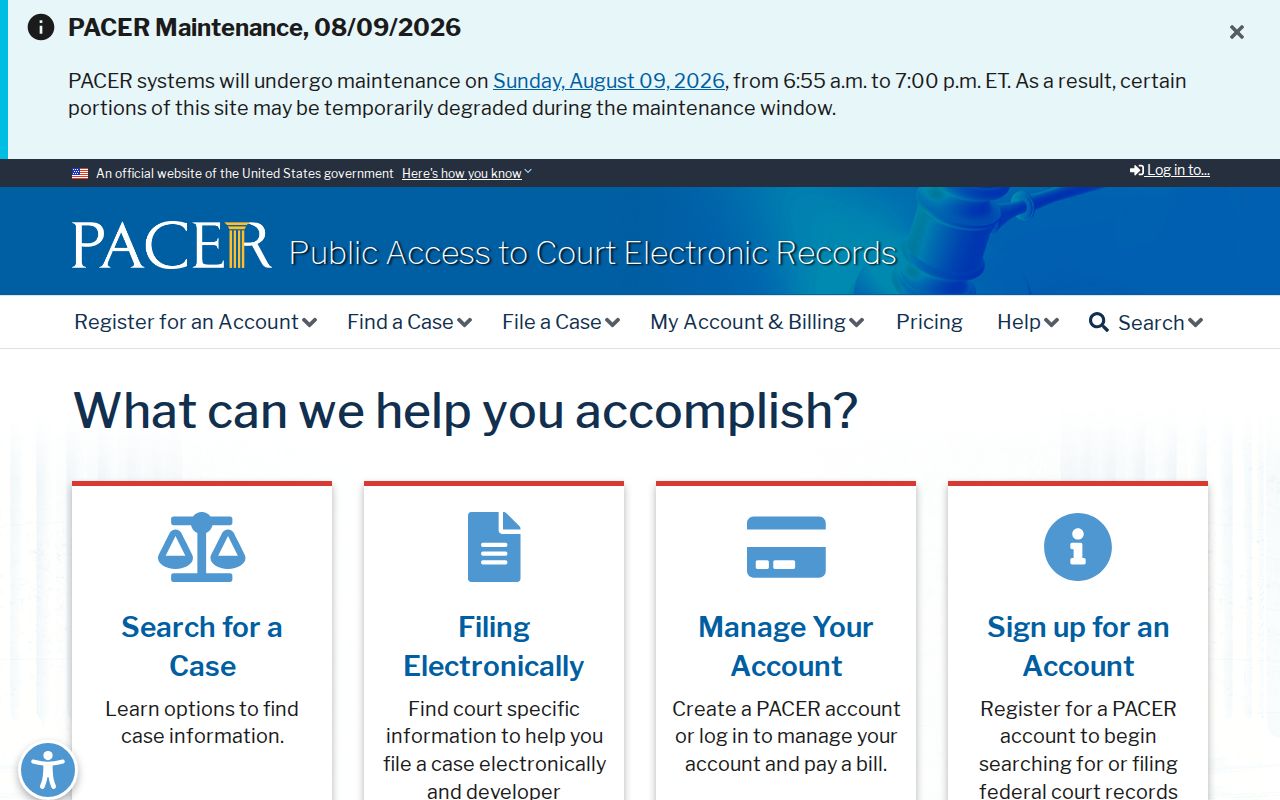
PACER requires registration and should be checked for the current fee rules before records are retrieved.
Access & Restrictions
Tennessee Supreme Court Rule 34 establishes procedures and limits for public access to court records. The Tennessee Public Records Act also supports access to identifiable public records, but it does not override a court order or a law that makes information confidential. Marion County requesters should ask for an existing docket or document, not a new analysis.
Juvenile matters, sealed and expunged files, Social Security numbers, medical data, account details, and protected victim or minor information can be closed or redacted. A missing web result proves little because Marion County has no comprehensive online trial portal. Call the clerk and ask whether the case is in another division, archived, sealed, expunged, or recorded under a different case number.
When a state history report lacks the Marion County outcome, obtain the court disposition and compare it with the TBI return. The originating clerk and TBI can then identify where the reporting gap arose.
Inspection and copies are separate requests. Ask the Marion County clerk whether a file can be reviewed at the counter, whether an appointment is needed, and which pages carry a copy or certification cost. For an archived docket, confirm retrieval time before traveling. A requester who needs only the result can often start with the judgment or disposition entry, while a question about how the case moved may require the docket and charging document as well.